
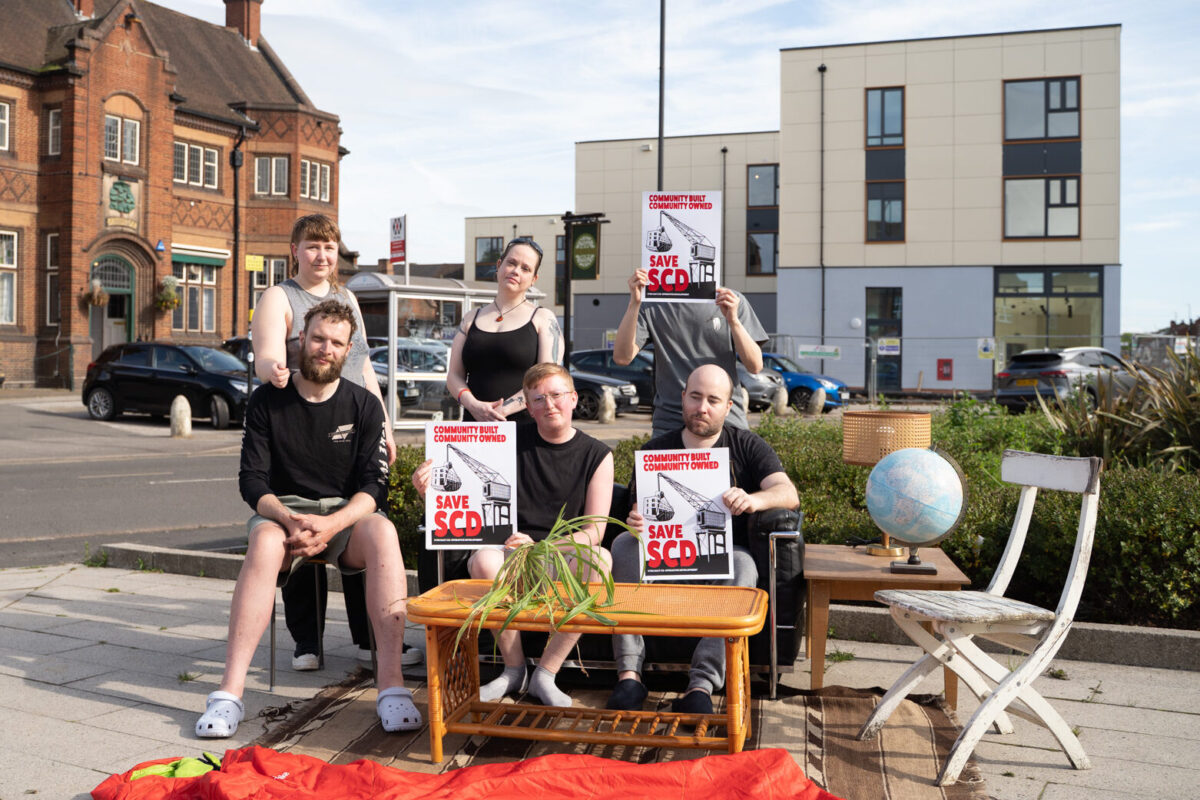
A Birmingham community group is being asked to foot the bill for a large housing association’s £2.3m construction failures.
GreenSquareAccord (GSA) is trying to pass over two million pounds of cost overruns, from £10.68m to £12.57m, from a delayed construction project they manage onto a small community group, leaving member businesses facing insolvency and residents homeless.
The community responded by securing additional funding from Birmingham City Council and is sourcing the balance from housing co-operatives and social investors to meet that gap, only for GSA to then raise the purchase price by a further £369,000, bringing the total to £12.94m, significantly above the valuation and an additional cost the community refuses to absorb.
For nearly a decade, residents and worker co-operatives in Stirchley, Birmingham, have been building Stirchley Co-operative Development (SCD) to combat the housing crisis: 39 affordable homes and purpose-built spaces for local businesses, owned and managed by the very people who live and work there and equivalent to 10% of all social rent housing built in Birmingham from 2020 to 2025.
SCD negotiated the land purchase by GSA and secured planning. Construction started with Tricas in June 2023. Twenty-five households became members and began planning how the flats and building would be collectively managed; 200 more had applied.
Then, in February 2024, the external contractor went into administration. GSA stepped in with their in-house team but without a formal contract, leaving SCD with no mechanism to challenge escalating costs or enforce deadlines. Completion slipped from October 2024 to June 2025, now to June 2026. Each delay brought increased costs, passed down to the community.
Why is the cost so high? GSA has faced problems in its construction subsidiaries-they have placed their modular timber-frame factory into voluntary liquidation and overseen severe delays in Stirchley from their construction arm, which has no new projects on the horizon.
Plans to exit loss-making activities were reported in a 2025 judgement by the regulator, which cited cost control and risk management as issues. GSA has this month been placed under review by the regulator for governance and viability.
There is an additional factor in that GSA is calculating interest on their spend across the whole build process and adding that ‘opportunity cost’ of their investment to the cost. Under a usual contract, a company would bid to complete the project with a price comparable to or below the valuation; any overruns or associated businesses’ losses would be covered by the contractor.
This would mean the bakery Loaf, which is now without premises, facing bankruptcy, and existing only through reserves and emergency grants, would have been supported to resume trading and risk would have been limited.
When GSA took the site from Tricas, the sale price increased from £10.53m to £10.68m, a workable amount bearing in mind the hard limits of SCD’s business plan funded by affordable rents. The further huge increases were at GSA’s risk, though the SCD board reworked the business plan, taking management costs in-house to make the partnership viable.
Charging opportunity interest against their own decision to become main contractor makes little sense. But even for that strategy, the fee calculated should be money actually lost, i.e. a net calculation.
In reality, for the first portion of the build, GSA had drawn down £4m capital grant to their accounts, which was accruing interest, effectively cancelling out some of their later losses as money was spent on materials and labour throughout the build.
In our ongoing discussions, SCD has asked; they have not carried out calculations to work this out. Instead, GSA is using a gross calculation that only reflects their losses and then passes them on to SCD.
SCD is a captive client for GSA. Our businesses and residents are from the community and have planned their lives around this project. GSA seems content to charge far above the valuation for a building to another registered provider, when GSA knew there were specialist requirements about when the site would be completed, all while they threaten the alternative, which is to become the sole landlord of the scheme that is completely reliant on tens of thousands of hours of voluntary work under the illusion of equal partnership of risk.
After ten years of effort and a project that should be a model for co-operative housing across the country, this community deserves better than to be left carrying the costs of a much larger organisation’s delays.
What is at Stake
Stirchley Co-operative Development (SCD) is currently facing a critical situation regarding its long-term community-led project.
Community Impact
The project provides 39 affordable homes and purpose-built spaces for local businesses that were to be owned and run by the people who live and work in the area. SCD represents 10% of all social rent housing built in Birmingham between 2020 and 2025.
Financial Risk
GreenSquareAccord (GSA) is attempting to pass over £2 million in construction cost overruns (increasing project costs from £10.68m to £12.57m) onto the community group.
Viability & Stability
Member businesses face the threat of insolvency, and many residents are left facing the risk of homelessness due to these financial pressures.
Member Democracy
SCD risks losing control of the scheme, with the potential for GSA to become the sole landlord, undermining years of voluntary work and community-led democratic management.
Please help us by contacting your MP, writing to the Housing Ministers, or reaching out to us with any potential leads on investment opportunities.
Write to the Housing Ministers
Steve Reed – Secretary of State for Housing, Communities and Local Government
- Fill out this enquiry form
- 020 7219 7297
Matthew Pennycook – Minister of State for Housing and Planning
- Fill out this enquiry form
- 020 7219 6280
Write to your local MP
Al Carns – Birmingham Selly Oak MP
Please contact Al Carns, the MP for Birmingham Selly Oak if you live in the constituency, to raise concerns about the actions of GreenSquareAccord.
If you live elsewhere, you can also write to your local MP, especially if the constituency in Birmingham, though bear in mind, they may not be familiar with Stirchley Co-operative Development.
Contact the West Midlands Mayor
Contact Richard Parker, West Midlands Mayor, and ask for the West Midlands Combined Authority to support SCD financially. While Birmingham City Council has supported the project, the WMCA have yet to support us with more than words.
Support the Co-operative
Additionally you could:
Find out more and get involved
www.stirchley.coop | Instagram: @stirchleycd